In the nearly a full decade that I’ve been filing lawsuits against the TSA, they have argued for a full panoply of immunities and protections to insulate them from any accountability. They argue qualified immunity — that their screeners shouldn’t be liable except for violations of “clearly established law.” They argue that if TSA screeners are following policy, that lawsuits in the normal federal trial court can’t proceed. They argue that they are immune from state tort claims (.pdf) — ordinary false arrest, assault, etc..
But earlier this week, in the case of grandmother Rhonda Mengert who was strip searched by TSA without suspicion and in blatant violation of TSA policy, the TSA added it all up and argued that because of all of these immunities, there actually doesn’t need to be a way to sue screeners for checkpoint abuse, no matter how egregious, at all. You see, what travelers should actually do instead of suing is just file complaints with the TSA:

Or! Ms. Mengert, who was just sexually assaulted by a TSA screener, could have vindicated her rights by telling a cop or a manager!
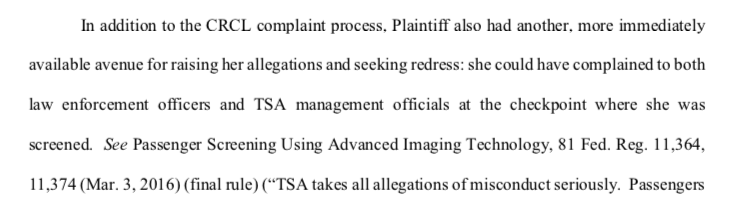
And so, because a traveler can file an online complaint or tell a cop or a supervisor, there is no need for a lawsuit with money damages:

For the lawyers out there, yes, this argument is that a Bivens claim cannot lie against a TSA screener, after TSA has already argued that Federal Tort Claims Act claims also cannot lie, and that state tort claims are also precluded so long as the screener was even nominally performing their duties (even if performance was in direct contradiction to their training and TSA rules) — in other words, no money damages against TSA screeners for checkpoint abuse, ever.
I am sure the government would love it if the remedy for a cop falsely arresting you or beating you back at the precinct was that you get to file a complaint and no more. That if the FBI searches your house without a warrant, you get to file a complaint and no more. That if your free speech rights are violated, you get to file a complaint and no more.
Obviously, we are here because people have complained and the injuries keep happening. Those who are injured by the government are, and should be, entitled to some compensation from the government. The argument that TSA is special and should be protected from lawsuits no matter what is antithetical to justice and, frankly, legally frivolous, and I look forward to filing a motion regarding the same in due time.
Mengert v. TSA – Motion to Dismiss Individual Defendants (.pdf)
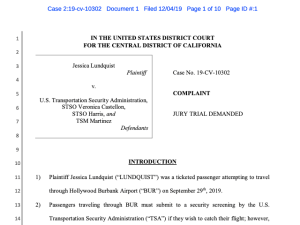 The blue-shirted TSA employees of which all travelers are familiar hold the job title, “Transportation Security Officer.” But despite the “officer” title emblazoned upon the plastic badge on their chest, TSA screeners are not law enforcement officers, do not have the authority to make arrests or hold travelers for any length of time, and if you break the law at a checkpoint, their only option is to call the real police to deal with the situation.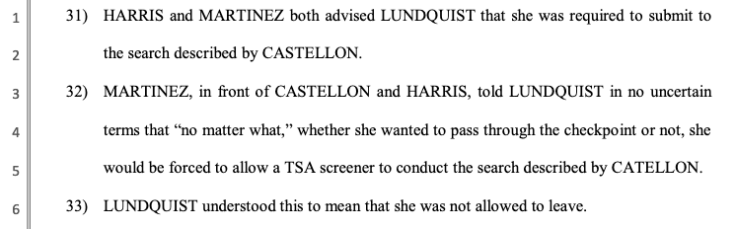
 Professional Troublemaker ®